Programmable Biology: Investing in Boltz’s Series A
Today, Greycroft is excited to announce our investment in Boltz’s $110 million Series A, led by Bessemer Venture Partners. Andreessen Horowitz, Amplify Partners, Zetta Venture Partners and Obvious Ventures all invested again. We join as new investors alongside F-Prime Capital and Benchling.
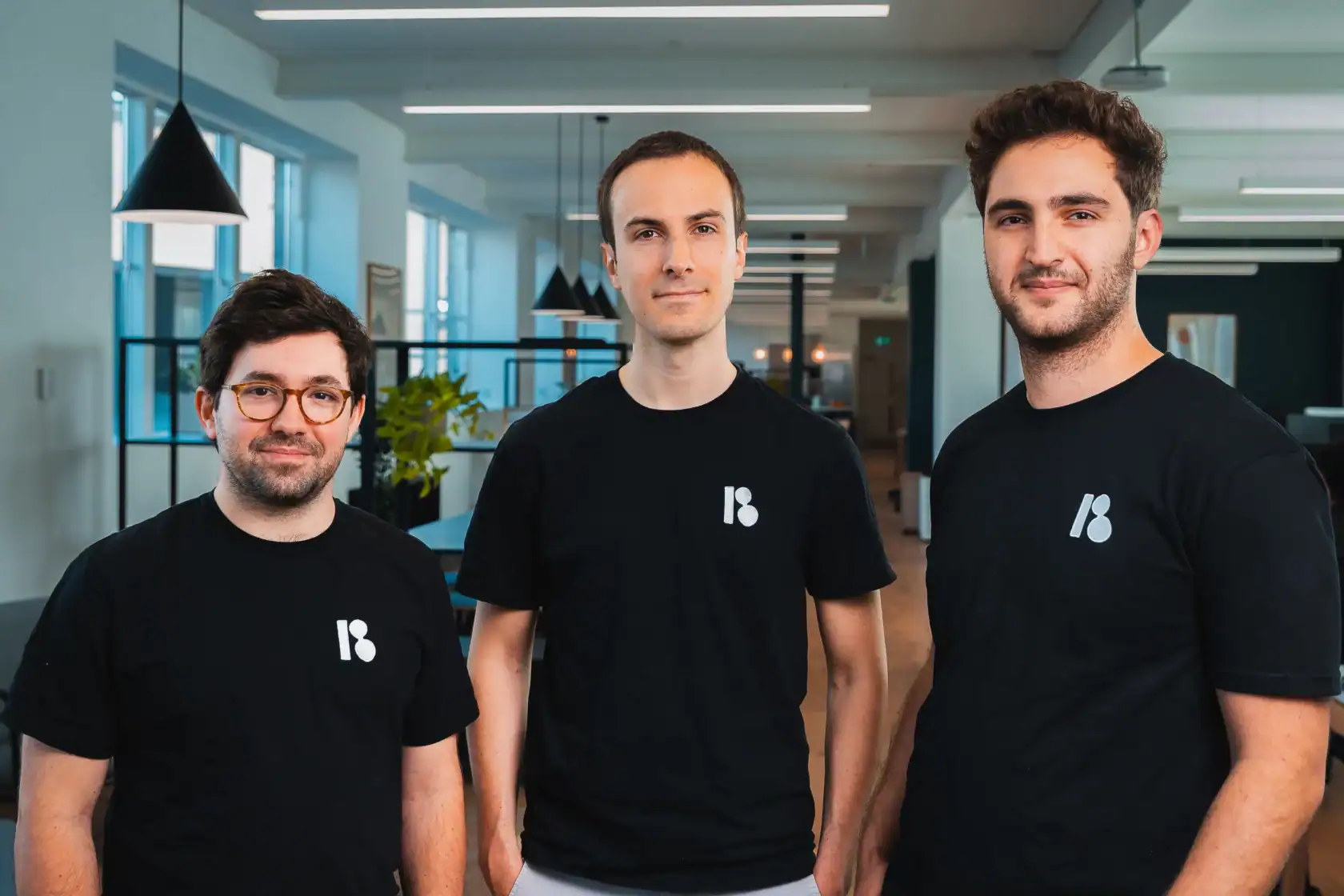
Pharma companies are investing in AI at every stage of drug discovery. Few teams seem to understand the underlying science and research needs as deeply as Boltz’s. We’re proud to partner with Gabriele Corso (Co-founder and CEO), Jeremy Wohlwend (Co-founder and CTO) and Saro Passaro (Co-founder) as they build what we believe will become the default infrastructure for designing new medicines.
The Bottleneck in Drug Discovery
Life-science R&D spending tops $500 billion a year, and the pharmaceutical industry alone spends roughly $288 billion of it. Yet the average drug still takes more than a decade to reach patients, and roughly 90% of candidates that enter clinical trials fail. Much of that time and money goes to finding out whether a molecule binds the way scientists hoped, one physical experiment at a time.
That is changing. AI models are now increasingly capable enough to run a growing share of those experiments on a computer. The AI drug discovery market is projected to grow roughly eightfold by 2030. Pharma is no longer just experimenting with AI. It is budgeting for it. Structural biology and biomolecular design, the specific parts of the pipeline Boltz currently plays in, is where AI’s impact is starting to commercially scale. That’s exactly why we believe Boltz is competitively positioned in the right place at the right moment.
Making Biology Programmable
Finding a molecule that binds the way you want has always meant the same loop: run an experiment, get some hits, refine, repeat. Boltz’s models can predict how proteins, small molecules and antibodies interact in 3D accurately enough that scientists can search for the right molecule on a computer instead of in a lab. Biology stops being something you stumble on and becomes something you specify and engineer.
The progression of Boltz’s models has been impressive:
- Boltz-1 (November 2024): Released open source out of MIT. It was the first fully open model to approach AlphaFold3-level accuracy , and it got quickly adopted by every major pharmaceutical company.
- Boltz-2 (June 2025): Added binding affinity prediction alongside structure. It approached the accuracy of physics-based methods at roughly 1,000x the speed. It was open sourced and remains to this day one of the most widely adopted AI models across the industry.
- BoltzMol-1 and BoltzProt-1 (June 2026): Boltz’s first proprietary models, for small-molecule and protein design. With them, the team found small-molecule hits and designed protein binders for a majority of the challenging targets it pursued, at a fraction of the usual time and cost.
These models power Boltz Lab, launched in January. It lets any scientist, or AI agent, screen and design candidates for far less cost and time than wet-lab work.
Boltz is also a public benefit corporation. From day one, the founders have said plainly that their mission is to make biomolecular AI available to every scientist. They are not building their own drug pipeline and do not compete with their customers. We believe their independent platform is differentiated and valuable.
From Open Source to Enterprise Infrastructure
Boltz’s open-source models are used by hundreds of thousands of scientists and by every top-20 pharma company . That adoption became the go-to-market engine. Researchers who were actively using the open-source Boltz models became the internal champions who brought Boltz Lab into their companies.
Today, Boltz Lab serves a growing list of pharmaceutical, biotech and industrial companies. Six of the world’s 20 largest pharma companies are customers, including Pfizer, GSK, Takeda and BMS. Since June, the volume of molecular tokens processed for customers has grown 50-fold. Scientists use it to break through on difficult targets, explore new regions of chemical space and speed up programs from target validation to lead optimization.
Boltz charges for usage, not per program or per seat. Better models make each design more valuable. Every model improvement grows the market. We believe this business model will be easier to scale than per program models.
The opportunity also doesn’t stop at pharma. Predicting how molecules bind matters anywhere companies work with molecules, from agriculture to materials to flavors and fragrances. Roughly a third of the Company’s open-source usage comes from outside pharma.
A Team Built for This Moment
The Boltz team has driven many of the key advances in this field over the past five years. They were publishing the papers that mattered long before they started a company.
Gabriele’s PhD work at MIT CSAIL produced DiffDock, one of the first models to use diffusion for molecular docking. That approach now underpins modern structure prediction. Jeremy earned his PhD at MIT in Regina Barzilay’s group, co-led development of Boltz-1, and now leads the company’s technology. Saro, formerly an AI research scientist at MIT’s Jameel Clinic, was the lead developer of Boltz-2.
What stands out is how fast this team has turned research into a business. In just over a year, they’ve grown from a small group of MIT researchers to 40 scientists and engineers. Gabriele has personally led the company’s first enterprise partnerships. Jeremy and Saro have built a research team that keeps winning the hardest recruiting battles in the field.
We couldn’t be more excited to support Gabriele, Jeremy, Saro and the entire Boltz team as they build the next generation of models, scale the biological token factory and redefine how life sciences R&D is done.
Disclaimer: This publication was prepared solely for informational purposes and should not be viewed as a current or past recommendation or a solicitation of an offer to buy or sell any securities or to adopt any investment strategy. The information included herein is based on the opinions of the authors and nothing shall, or is intended to, constitute investment, financial, legal, accounting, or tax advice by the authors or Greycroft. This publication contains forward-looking statements, which are based on beliefs, assumptions and expectations that may change as a result of many possible events or other factors. Such statements involve known and unknown risks, uncertainties and undue reliance should not be placed thereon. Greycroft does not undertake any obligation to update any forward-looking statements to reflect circumstances or events that occur after the date on which such statements were made. The information in this document, including any charts, graphs, and other visual aids, has been developed internally and/or obtained from third-party sources believed to be reliable; however, Greycroft does not assume any responsibility for the accuracy or completeness of such information or undertaken any independent review of such information. Any investments or portfolio companies mentioned, referred to, or described are not representative of all investments in vehicles managed by Greycroft, and there can be no assurance that the investments will be profitable or that other investments made in the future will have similar characteristics or results. A list of investments made by funds managed by Greycroft is available at https://www.greycroft.com/investments/.