The Enterprise Will Own Its Memory: Our Investment in Rocker
The more work we give agents, the more of the company we give them as well. An agent that schedules a meeting needs access to a calendar. An agent that decides whether a meeting matters needs to understand the business. It needs to know which customer is at risk and why a conversation that looks routine may be the most important thing you do today.
As agents take on that work, the history of their conversations and decisions becomes a working memory of the company. It captures knowledge that has always been difficult to preserve, including the reasoning behind a decision and the commitments people make along the way.
I expect a backlash in the enterprise against sending all of that activity through a handful of frontier model providers. Companies need to decide where their conversations are stored, who can access them, and how much operating history an outside provider should hold. I believe more enterprises will want direct control over that critical infrastructure.
Emerging architecture puts a company’s private models and durable memory inside its own environment, either on premises or in a virtual private cloud. A growing share of the work happens there. Frontier models remain available for tasks that require them, receiving only the information needed and authorized for a particular request. The full conversation history stays under the company’s control.
That design also preserves the ability to change model providers without losing the context accumulated over years of work. Businesses can adopt a better model while retaining the knowledge that makes the models useful.
This idea requires substantial engineering. A modern router has to understand the request, determine which models are allowed to see the underlying data, and select one capable of doing the work at an acceptable cost and speed.
A model’s training shapes the requests it handles well, and a format that works for one can fail with another. A modern router needs to translate an employee’s question into a form suited to the model doing the work. That can mean rewriting a prompt, breaking it into smaller steps, or supplying examples. The goal is to bring the request closer to patterns the model learned during training, then verify that the result is reliable and preserves the user’s intent.
Take a simple question: “What is holding up the launch?” The system has to establish what launch you mean and what you are allowed to know. It may then need to turn that question into a structured review of unresolved dependencies and commitments across a series of conversations. A model might need the relevant commitments and dates, while the surrounding employee discussions stay private.
I believe this will broaden what alignment means in the enterprise. The practical task is to make an agent operate within the company’s objectives, language, and permissions. Query rewriting is one piece of that work. So is knowing when the available context is insufficient and the agent should ask a question before it acts.
Shared memory adds another constraint. An agent helping the sales team should be able to use approved product information. It should not be able to reveal a confidential board discussion because that discussion appeared in a summary. Permissions must follow the information as it moves through the system.
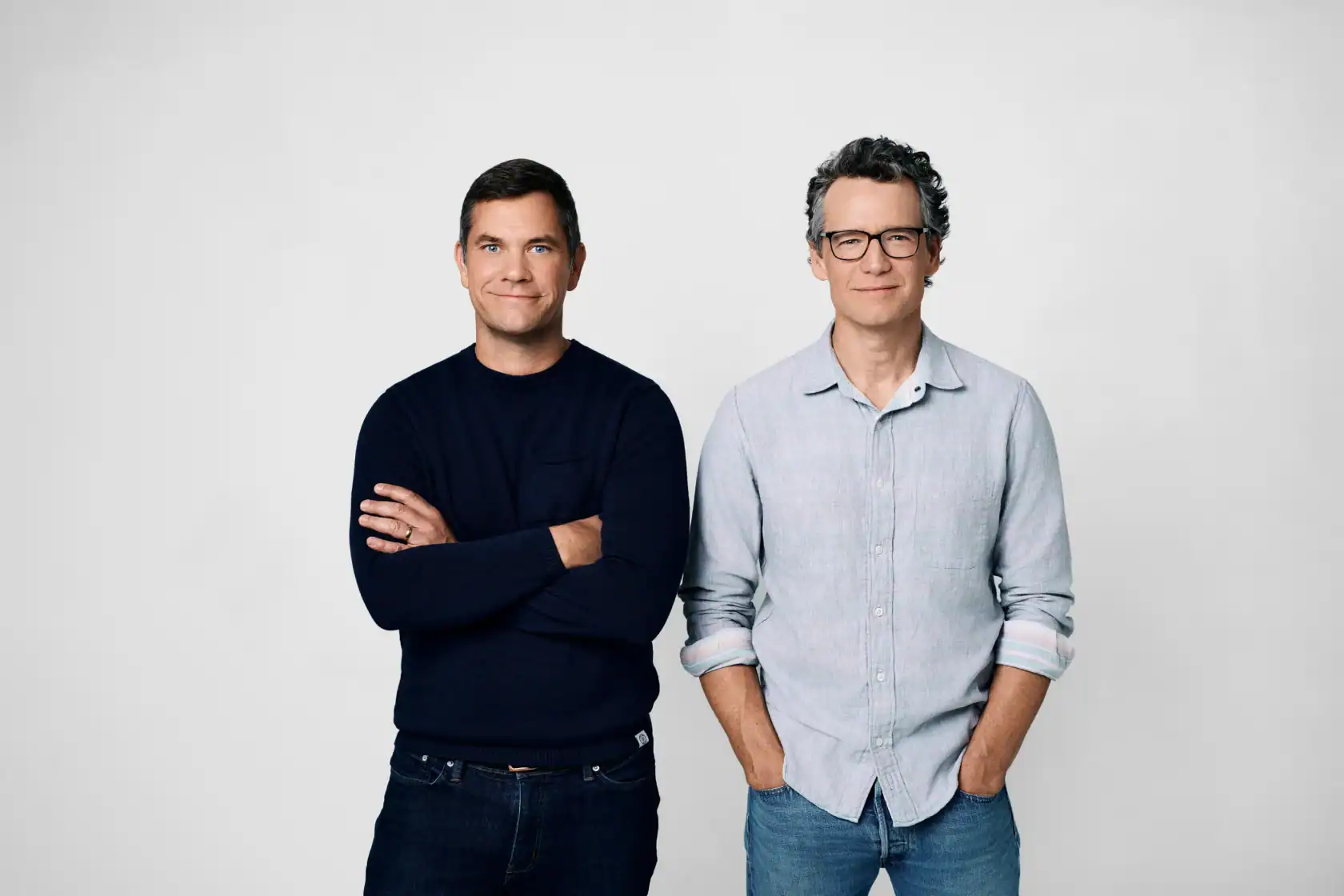
This is the thesis behind Rocker, founded by Alex Vogenthaler and Peter Terrill. On the surface the company looks like a next-generation AI agent. Behind the scenes it is a new approach to software. As Arthur C. Clarke wrote, “Any sufficiently advanced technology is indistinguishable from magic,” and we believe Rocker is magic.
Prior to Rocker, Alex ran the products behind 90% of Stripe’s revenue and was the GM of Google Drive, with over 1 billion daily active users. Peter was a three-time founder who oversaw Stripe Connect. Their experience gave them a clear view of both the product employees would want and the infrastructure enterprises would require.
Rocker has since built a harness that runs inside a company’s own cloud. The harness is the software around the models that manages context, memory, tools, and permissions. Its purpose is to help employees work with shared knowledge while preserving control over the information behind it. We believe that is a foundation for a new kind of enterprise workspace.
I expect the next enterprise workspace to be built around a company’s memory. Employees will use it to understand what matters, and agents will use it to manage applications, direct communications, and perform work. We believe Rocker is that future workspace.
Congratulations to Alex, Peter, and the Rocker team on the launch.
Disclaimer: This publication was prepared solely for informational purposes and should not be viewed as a current or past recommendation or a solicitation of an offer to buy or sell any securities or to adopt any investment strategy. The information included herein is based on the opinions of the authors and nothing shall, or is intended to, constitute investment, financial, legal, accounting, or tax advice by the authors or Greycroft. This publication contains forward-looking statements, which are based on beliefs, assumptions and expectations that may change as a result of many possible events or other factors. Such statements involve known and unknown risks, uncertainties and undue reliance should not be placed thereon. Greycroft does not undertake any obligation to update any forward-looking statements to reflect circumstances or events that occur after the date on which such statements were made. The information in this document, including any charts, graphs, and other visual aids, has been developed internally and/or obtained from third-party sources believed to be reliable; however, Greycroft does not assume any responsibility for the accuracy or completeness of such information or undertaken any independent review of such information. Any investments or portfolio companies mentioned, referred to, or described are not representative of all investments in vehicles managed by Greycroft, and there can be no assurance that the investments will be profitable or that other investments made in the future will have similar characteristics or results. A list of investments made by funds managed by Greycroft is available at https://www.greycroft.com/investments/.